

How to Winterize Your Car in Trenton, NJ
Living in New Jersey, you know what to expect from winter. You’ll see snow, ice, slush, freezing rain, and of course, cold temperatures. The cold temperatures and wintry weather present unique challenges to drivers in the region. However, you can take steps to avoid a possibly unsafe driving situation or breakdown in the cold. Here are some tips and tricks to winterize your vehicle.
Check and Fill Your Antifreeze
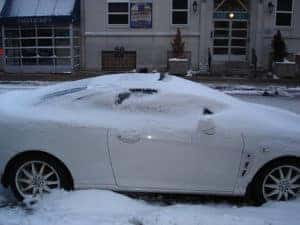
“Snow covered car” licensed under CC BY 2.0 via Flickr by Nishant Khurana
Your engine cooling system uses a liquid called antifreeze to help regulate its operating temperatures. This unique fluid has a high boiling point which prevents it from evaporating, but it also has a low freezing point that keeps it from freezing during the winter. First, the system pumps the fluid through the engine block, absorbing the heat generated by combustion. Then, the fluid pumps through the radiator, which disburses the heat before starting the cycle again.
Most experts recommend changing your antifreeze every 30,000 miles. Check your owner’s manual for the exact interval. It won’t hurt to change it early, so if you’re close to the interval as the weather gets colder, go ahead and change it. Some drivers use a mix of water and antifreeze, but most mechanics don’t suggest this, especially during colder months. Too much water in the system can result in coolant freezing which can damage your engine.
Inspect and Replace Your Tires
As the only part of your vehicle that contacts the road, your tires provide essential traction and control when the road gets slippery. The less tread you have on your tires, the poorer the traction the tires offer. Heavy snow and slush can severely impede how your tires contact the road. Worn tires only exacerbate the problem.
A good home test of your tires’ tread would be to place a quarter between the tire treads with George Washington’s head facing down. If you can see the top of his head, you need to replace your tires.
If you prefer to have a professional do this, our service center technicians can quickly inspect your tires and recommend a replacement if necessary. We stock an expansive inventory of tires for all Hyundai models and in most cases, can replace them in under 30 minutes.
Many of our customers prefer to switch to a winter tire during the cold. Winter tires have specially designed tread patterns to push through the snow for improved traction.
Test Your Car’s Battery
You rely on your vehicle’s battery to start your car. Unfortunately, cold weather has a profound impact on your battery’s ability to conduct electricity. Your battery can lose 50% of its power at 32 degrees Fahrenheit. Before the temperatures get frigid, you should test your battery. Our technicians can identify a failing battery and replace it immediately.
Change Your Engine Oil
Engine oil protects your engine’s many moving parts by lubricating them and providing a thermal barrier. As oil breaks down over time, these protective properties fade. In addition, cold temperatures can reduce the flow of your oil, also known as viscosity. A lighter-weight oil will flow faster in the cold than heavier oil, providing the lubrication and thermal barrier you need. Many drivers in the Northeast change their oil for the winter to compensate for the cold.
Inspect Your Brakes
At Hyundai of Trenton, we recommend you have your brakes inspected every 10,000 miles or perhaps every other oil change. When our technicians inspect your brakes, they’ll look at your brake pads, test your lines, check your calipers, rotors, and drums, and test your master cylinder to ensure the entire system operates properly.
Modern vehicles have some form of the anti-lock braking system (ABS). Your car’s ABS helps you maintain traction during emergency braking situations by pulsing pressure to your brake pads instead of locking them onto your discs. By pulsing the pads, the wheels continue rotating, which keeps your tires in contact with the road, improving traction. ABS has a considerable impact on your safety in wintry weather. Our technicians will test your ABS as well to ensure proper function.
Change Your Wiper Blades
Heavy snow and ice come with the New Jersey winters. Therefore, it’s essential you have windshield wipers capable of handling the increased weight of snow and holding up against the frost. You can purchase winter wiper blades for around $20 and many people put these on themselves. If you prefer, we can do this for you at our service center while we change your oil.
Winter Weather Emergency Kits
No matter what precautions you take, breakdowns can still occur. Assembling a kit for emergencies can save you from extended breakdowns in freezing weather. Your kit should include jumper cables or a portable jumpstart kit. Should your battery fail, jumper cables allow you to hook up to another car. In the absence of another vehicle, a jumpstart kit has its battery to jumpstart your vehicle. Jumper cables cost less than $20, and a portable jumpstart kit costs around $50-$75.
Keeping a blanket, gloves, a flashlight, and spare batteries can also help you get through an extended breakdown. Keeping a portable battery to charge your phone can come in handy too.
Many drivers now include a portable air pump in their emergency kit. You can find a portable air pump that operates off your 12-volt battery connection or hooks directly to your car battery. Cold weather causes your tires to lose one pound of air pressure for every 10 degrees reduction in air temperature.
Keeping a bag of rock salt or sand in your trunk can help in several ways. First, the added weight can improve traction, particularly in a rear-wheel-drive vehicle. If you find your car stuck in the snow or ice, you can spread the rock salt or sand out to help gain traction. Today, you can buy traction pads designed to slip underneath your tires to help improve traction on slippery surfaces. Off-road enthusiasts typically have these already, but these can be a lifesaver if you drive in the snow.
Winter comes to New Jersey every year and with it, cold, snow, and ice. Hyundai of Trenton wants you to be prepared and we hope you found these tips helpful. If you feel like we left an important winterizing tip off the list, send us an email. We’ll do our best to update it to keep everyone informed.
0 comment(s) so far on How to Winterize Your Car in Trenton, NJ